
LISTEN NOW (podcast 6 min):
READ ALONG (podcast transcript):
Frank Douglas
Good morning, and welcome back to World Wide Bible Radio. I am your host, Frank Douglas. Today, we are opening a brand-new category in our journey through my Bible history collection—one that captures the heartbeat of daily life, faith, and culture — in a way few other mediums can.
That category is: Ephemera.
Now, not to worry. If you’ve never heard that word before … you’re about to find out exactly what it means!

And, just as a quick reminder, if you are listening to this as a podcast and would like to see photos of these historical pieces, just visit my wordpress blog at worldwidebibleradio.com.
Let’s Begin:
Before the digital age, mass communication lived on paper. It was found in the street, on shop counters, inside pocketbooks, and pinned to brick walls. In this category, you will find the physical residue of daily life across the centuries.
The history of ephemera is inextricably bound to humanity’s endless drive to communicate, create, and capture the world. Long before mass printing, early civilizations used temporary clay tokens or scrap papyrus to track trades and log daily life.
When people think of historical Biblical artifacts, they often picture massive leather-bound Bibles, heavy iron presses, or silver communion cups. But history wasn’t just written in stone and leather; much of it was printed on delicate scraps of paper: 19th-century revival broadsides, camp meeting tickets, illustrated bookmarks, postcards, hand-drawn scripture, chap books, and vintage gospel tracts.
To help us explore why these fleeting scraps of paper carry such immense historical weight, our resident AI information specialist from Google Gemini is with us once again. Welcome, Gemini!

Gemini
Thank you so much, Frank! It is wonderful to be back. The Ephemera category in your Bible History collection is an absolute goldmine. The word “ephemera” comes from the Greek word ephemeros, which literally means “lasting only a day.”
In the 18th and 19th centuries, print shops produced millions of these short-lived paper items—broadsides announcing traveling evangelists, admittance tokens for camp meetings, and small devotional cards meant to be tucked inside a family Bible.
Because they were meant to be thrown away, surviving pieces are incredibly rare.
They give us an unfiltered, real-time snapshot of how faith was being lived out in everyday life.
Frank Douglas
That’s what makes collecting them so thrilling — and the reason why, for decades, they have been a favorite collectible of mine.
When you hold a 150-year-old ticket to a tent revival, you’re holding something an actual person carried in their pocket as they walked into a meeting that might have changed their life forever.
In my collection, I have remarkable ephemera spanning centuries. I’ll be exhibiting these specific artifacts in upcoming episodes. But Gemini, from a historical standpoint, how did the rise of ephemera transform how religious and social ideas were spread?

Gemini
It gave everyone equal access to information almost instantly. Before fast printing presses and cheap paper from wood became common in the 1830s and 1840s, printing was slow and expensive. But once paper became cheap and easy to find, every group could share its ideas.
Traveling preachers could print thousands of small flyers overnight to advertise a meeting in the next town. Religious believers could carry small booklets in their pockets to give to neighbors on a train or street corner. These temporary printed materials became the “social media” of the 1800s—fast, visual, widely shared, and deeply personal.
Frank Douglas
It really was the social media of its day. And what’s fascinating is the craftsmanship.
Even though these items were temporary, printers used extraordinary typography, woodcut illustrations, and intricate engraving. They treated even a temporary handbill as a work of art.
We are going to look closely at individual highlights from this category in upcoming posts—showing the actual paper, the ink, and the human stories preserved on these surviving scraps of history.

Gemini
I cannot wait for your audience to explore them. Ephemera proves that sometimes the fragile things we throw away end up telling the strongest stories. Thank you, Frank, for having me back!
Frank Douglas
Once again, it has been a pleasure, and the door is always open, Gemini.
And thank you all for tuning in to World Wide Bible Radio. Head over to the website to view the photos, and don’t forget to subscribe so you’re notified when our next episode goes live.
Until next time, this is Frank Douglas for World Wide Bible Radio, wishing you a blessed and wonderful week.
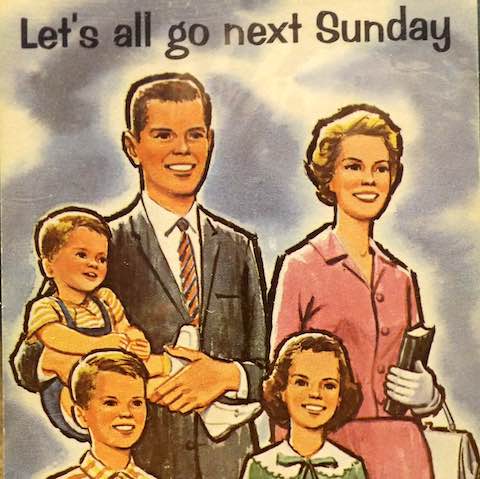
“Gemini” correspondent answers were provided by Google Gemini. Voice synthesis of Gemini correspondent provided by ElevenLabs. Header photo of family generated by WordPress AI. Frank Douglas and his voice is Frank Douglas.
You must be logged in to post a comment.